
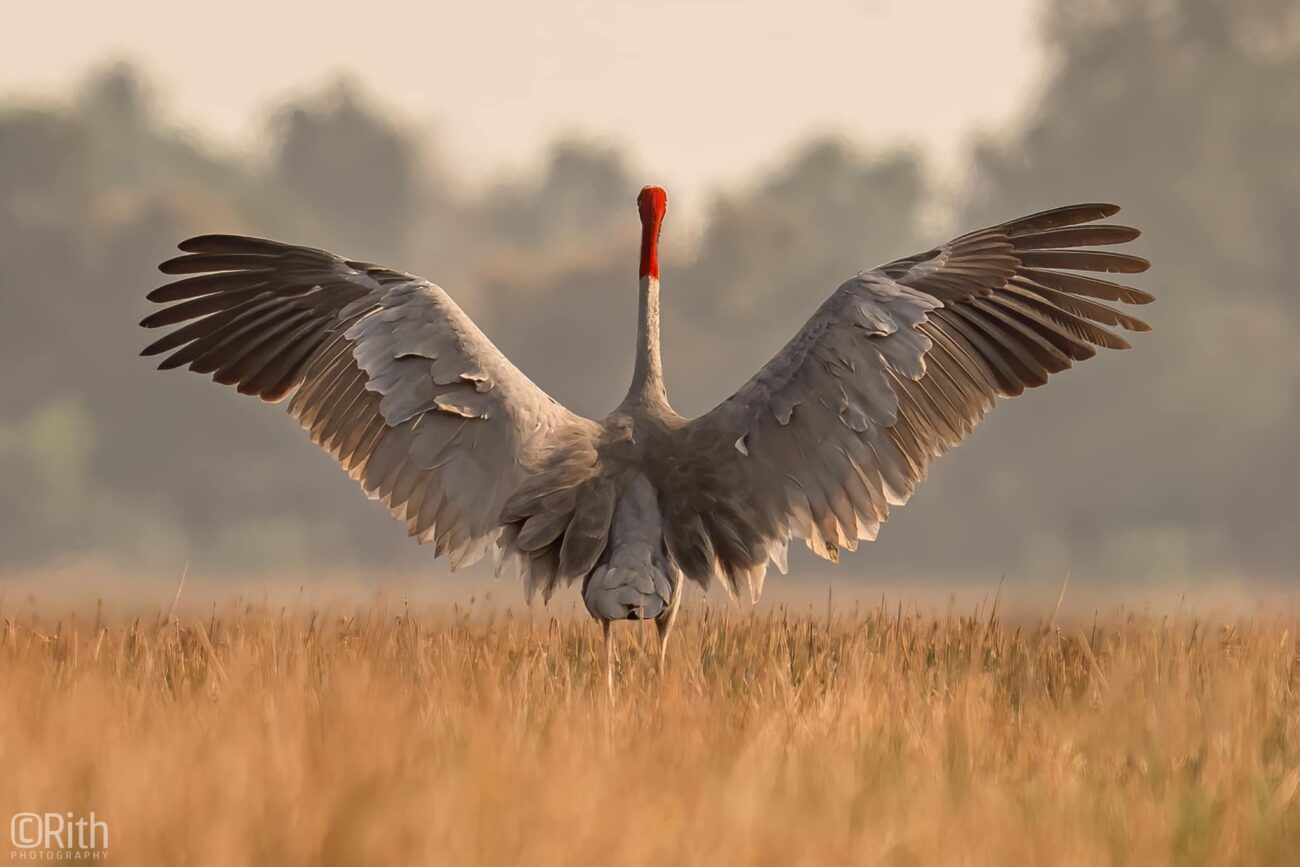
The Sarus Crane (Antigone antigone), known in Khmer as ក្រៀល (Kriel), is one of Cambodia’s most awe-inspiring wild treasures. Standing between 150 and 180 centimeters tall, it holds the title of the world’s tallest flying bird—often eye to eye with the average Cambodian adult. Even its footprints, larger than a grown man’s hand, leave quiet imprints across the wetlands, like signatures of a graceful giant.
But beyond its impressive height, the Sarus Crane carries something far more powerful: a story of resilience, devotion, and deep cultural roots in Cambodia.
How to Recognize a Sarus Crane
Spotting a Sarus Crane in the wild is unforgettable—and surprisingly easy if you know what to look for:
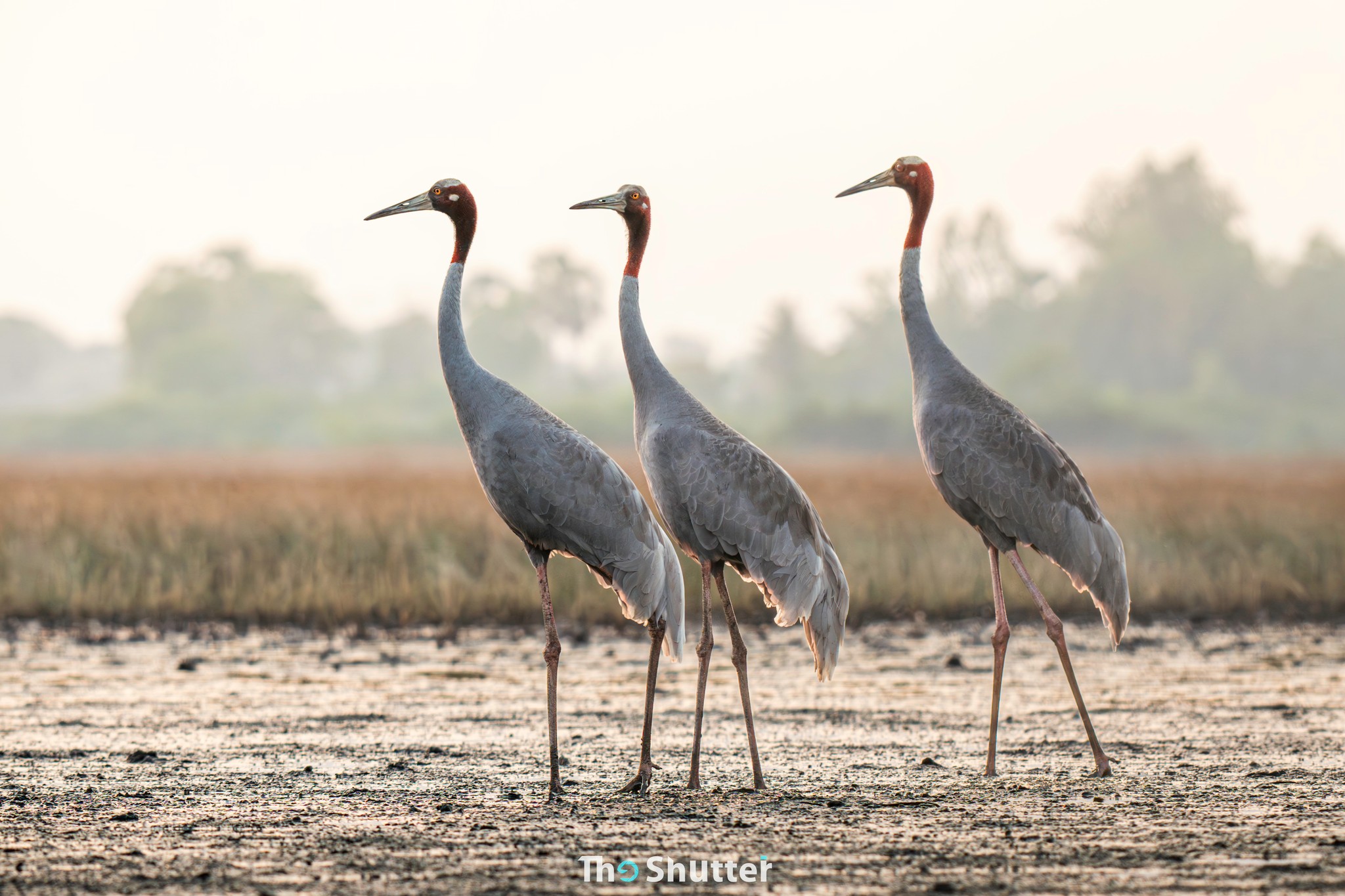
- Soft grey feathers covering most of its body
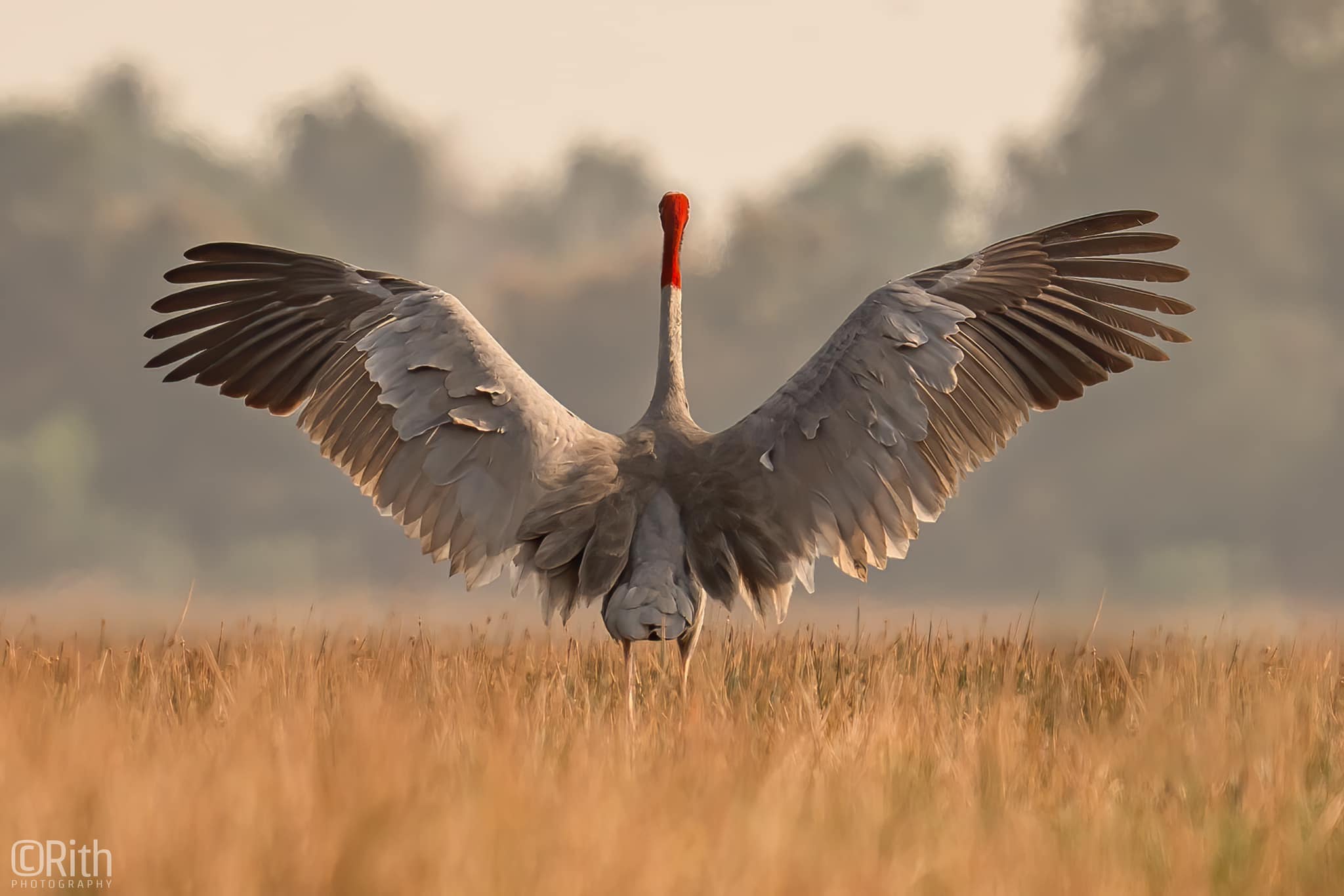
- A striking bare red head and upper neck, glowing vividly in sunlight
- Long pink legs that seem to stretch endlessly beneath its tall frame
When standing in shallow water or open grasslands, their reflection doubles their height, creating a scene that feels almost mythical.
A National Treasure in the Wetlands
As of 2025, around 200 Sarus Cranes call Cambodia home. This makes the country one of the most important strongholds for the species in Southeast Asia, with higher numbers than neighboring Vietnam and Laos. You can encounter these elegant birds in several protected landscapes:
- Anlong Pring Protected Landscape
- Ang Trapeang Thmor
- Boeung Prek Lapouv Protected Landscape
- Lumphat Wildlife Sanctuary
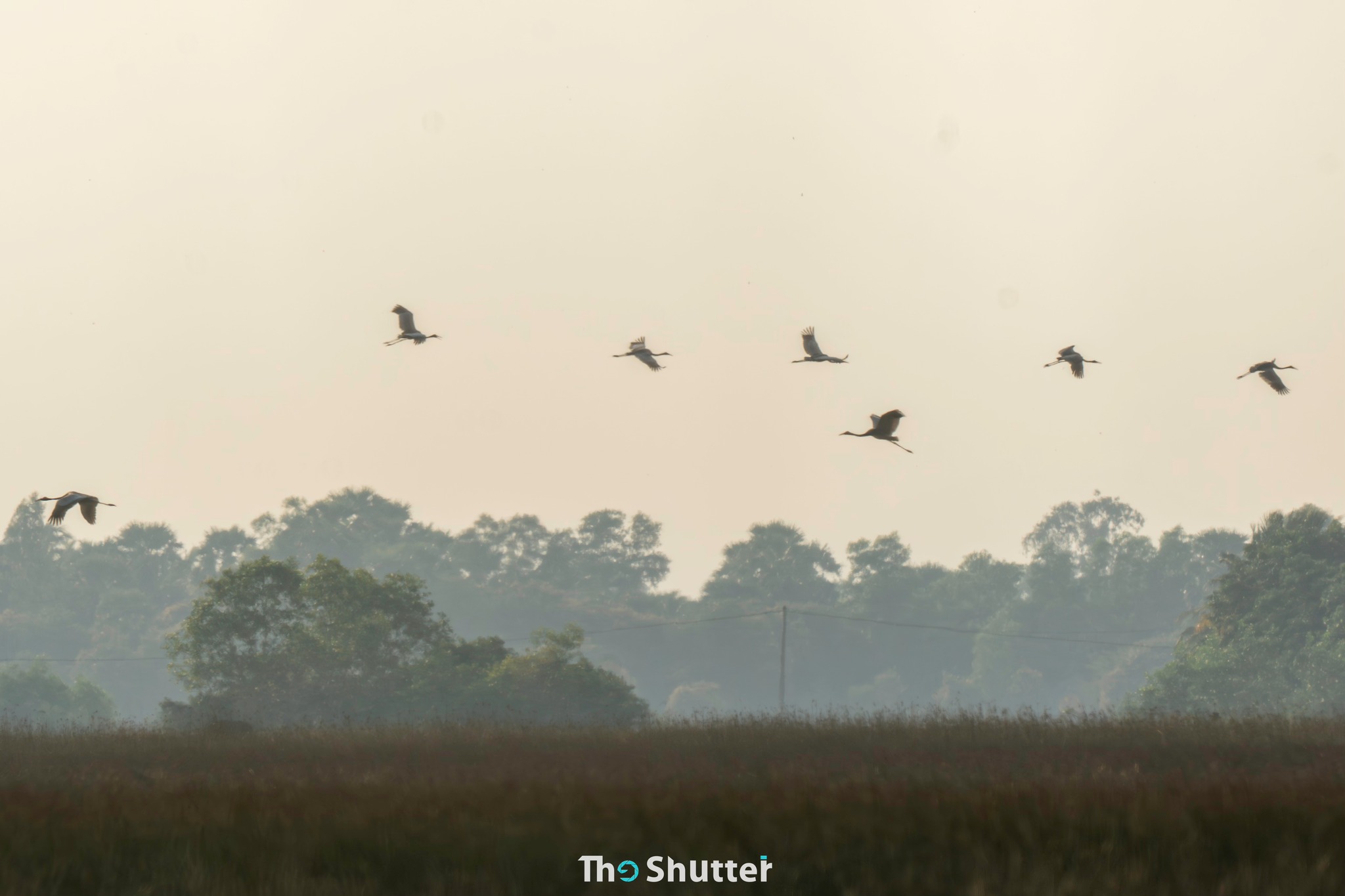
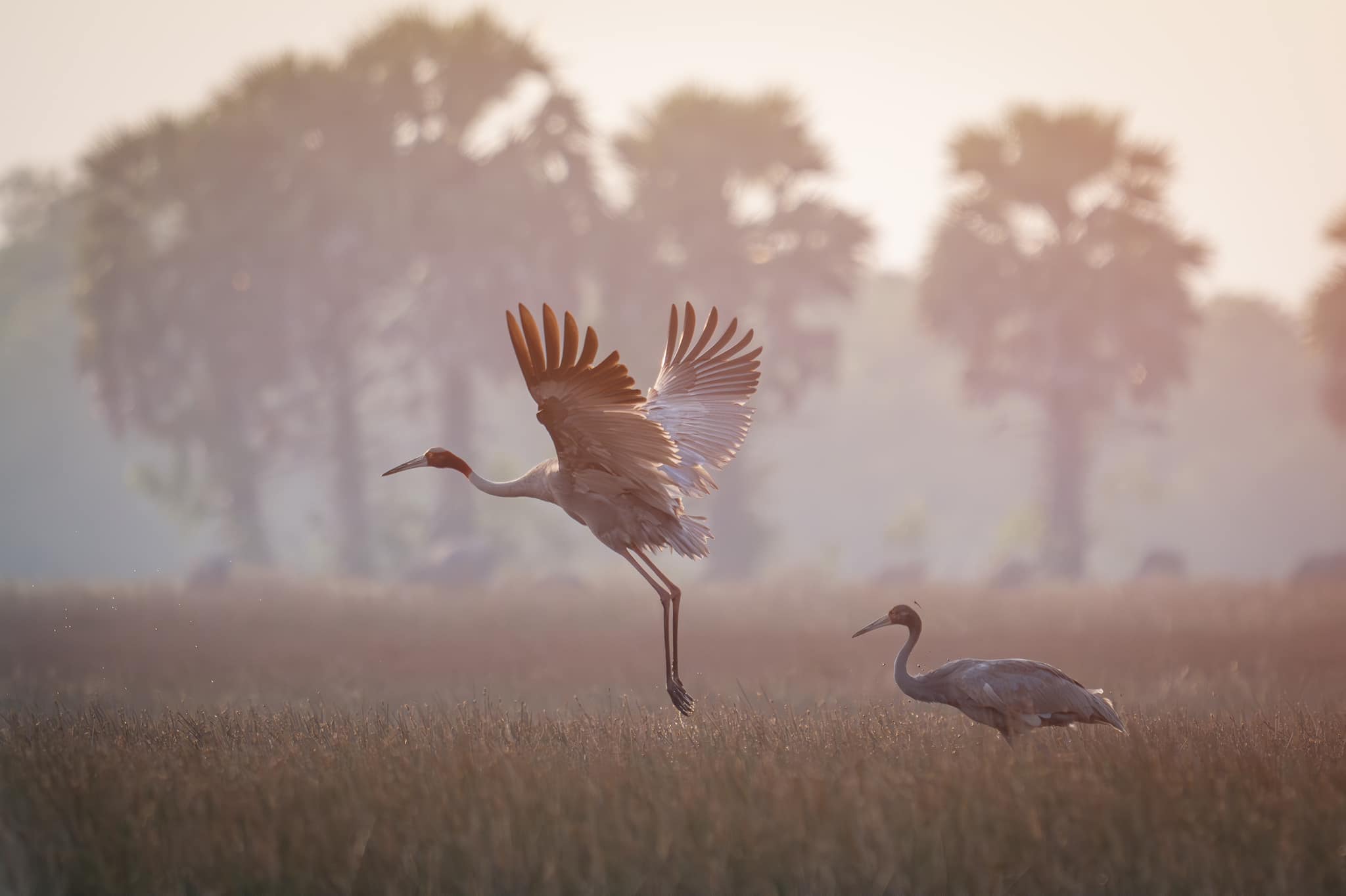
During the dry season, some cranes move across the Mekong Delta region in search of shallow wetlands, open grasslands, and safe feeding grounds. These protected areas offer exactly what they need: water, food, and peace. For birdwatchers and nature lovers, witnessing a pair of Sarus Cranes standing quietly in golden grass at sunrise is an experience that feels almost sacred.
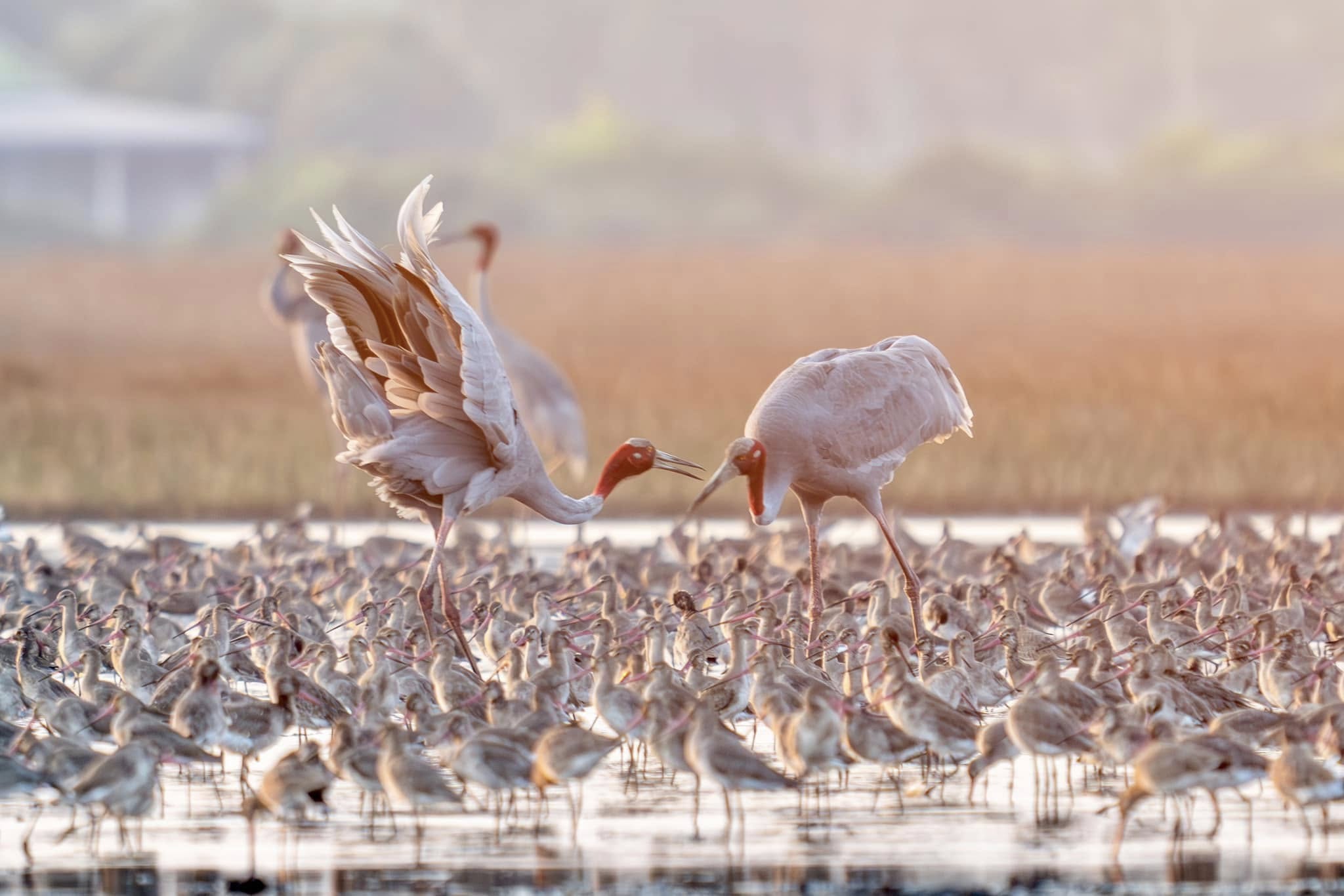
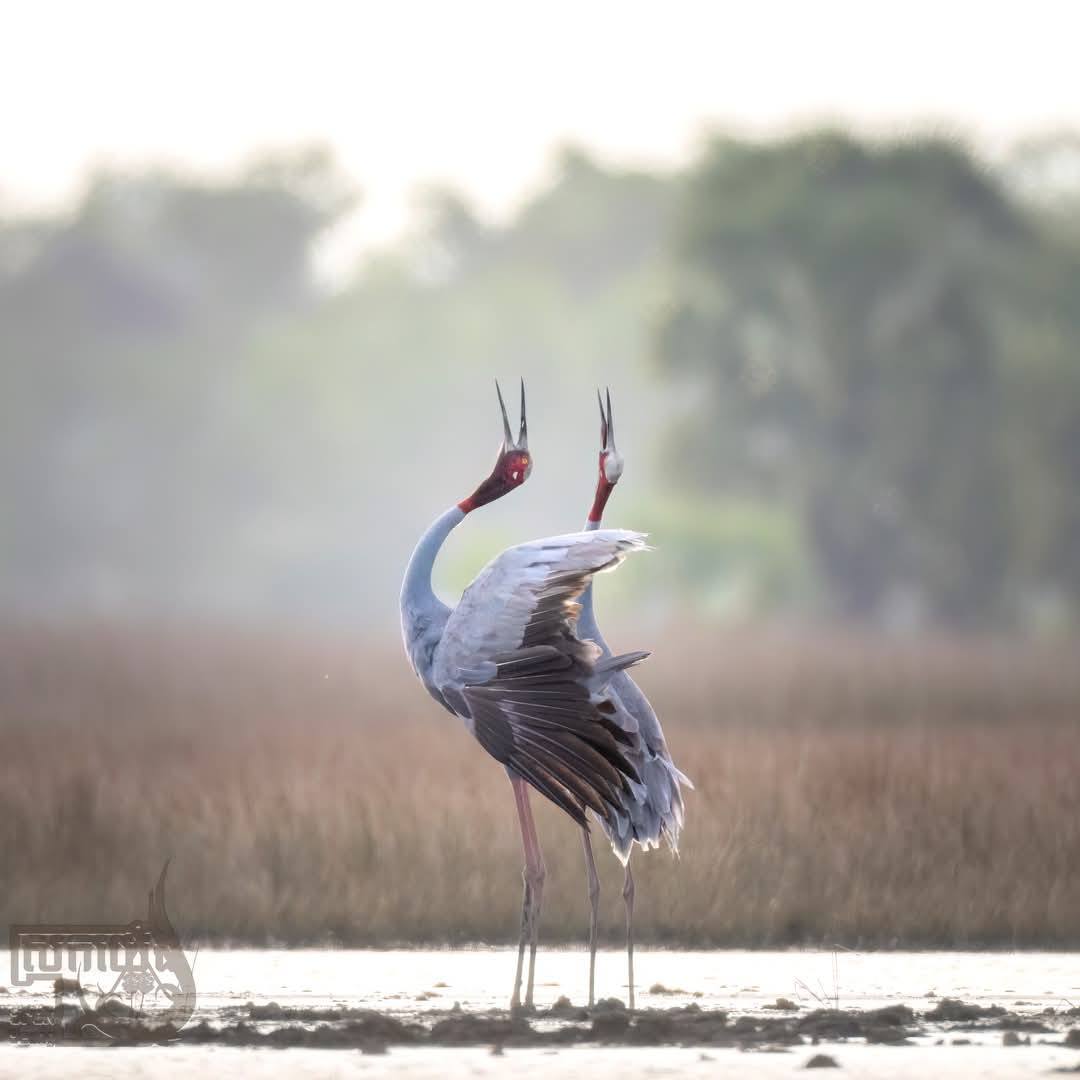
As the early rainy season arrives in May, pairs begin their elegant courtship dance—leaping into the air, spreading their wings, and calling out in powerful, echoing trumpets that can be heard over a kilometer away. These performances strengthen their lifelong bond, as Sarus Cranes are famously monogamous and mate for life.
After mating:
- The female usually lays one or two eggs.
- Eggs hatch between June and October, depending on rainfall and habitat conditions.
- Only one or two hatchlings typically survive each season.
The chicks grow under the careful protection of both parents, learning to forage in flooded grasslands and shallow wetlands.
The Dance of Lifelong Love
One of the most magical moments in the Cambodian wild is the Sarus Crane’s courtship dance. With synchronized leaps, outstretched wings, and powerful trumpet-like calls that echo across the wetlands, crane pairs perform a ritual that symbolizes deep connection. Sarus Cranes are monogamous and mate for life—a rare and beautiful reminder of loyalty in the natural world.
This symbolism is not new to Cambodia. Ancient artisans immortalized these elegant birds in stone carvings at Bayon and Banteay Chhmar temples of Angkor. For centuries, Cambodians have seen the crane as a symbol of fidelity, harmony, and grace—values deeply woven into Khmer culture.

From Near Loss to Regional Hope
The story of the Sarus Crane is not without struggle. Habitat loss and environmental pressures have reduced populations across Southeast Asia.
When the species became extinct in Thailand, conservationists turned to Cambodia for hope. In 2016, Sarus Cranes from Cambodia played a key role in reintroduction efforts, helping restore the species beyond its borders.
This quiet success highlights Cambodia’s growing leadership in wildlife conservation—proof that protection and community involvement can make a real difference.
Why the Sarus Crane Matters
The Sarus Crane is more than a rare bird. It represents:
- The health of Cambodia’s wetlands
- The balance between development and preservation
- A living link between ancient culture and modern conservation
Their deep, resonant calls—audible from over a kilometer away—still echo across flooded plains and rice fields. Yet as climate change and land conversion threaten wetland ecosystems, their survival depends on continued protection and awareness.
Did You Know?
- The Sarus Crane is generally non-migratory, staying within suitable wetland regions year-round.
- Despite their size, they are gentle and shy, preferring quiet landscapes.
- India holds the world’s largest Sarus Crane population, where they are often seen walking in rice fields and are affectionately called the “dancing birds of love.”
A Shared Story of Respect and Survival
From the sacred carvings of Angkor to the quiet wetlands of Kampot and Takeo, the Sarus Crane connects Cambodia’s past, present, and future. To see a pair standing side by side in the early morning mist is to witness something deeply moving—a reminder that nature’s greatest treasures are not loud or fast, but patient, faithful, and enduring. Protecting the Sarus Crane means protecting the soul of Cambodia’s wetlands. And when we protect them, we protect a story that belongs to all of us.
Anlong Pring Protected Landscape, Kampong Province:
Boeung Prek Lapouv Protected Landscape, Takeo Province:
Ang Trapeang Thmor, Banteay Meanchey Province:
Lumphat Wildlife Sanctuary, Ratanak Kiri Province:
Media credit: Vannarith Nob, Miller Snap, The Shutter, Ieng Pisey, Sam Veasna Conservation Tours, and others attributed in media titles.