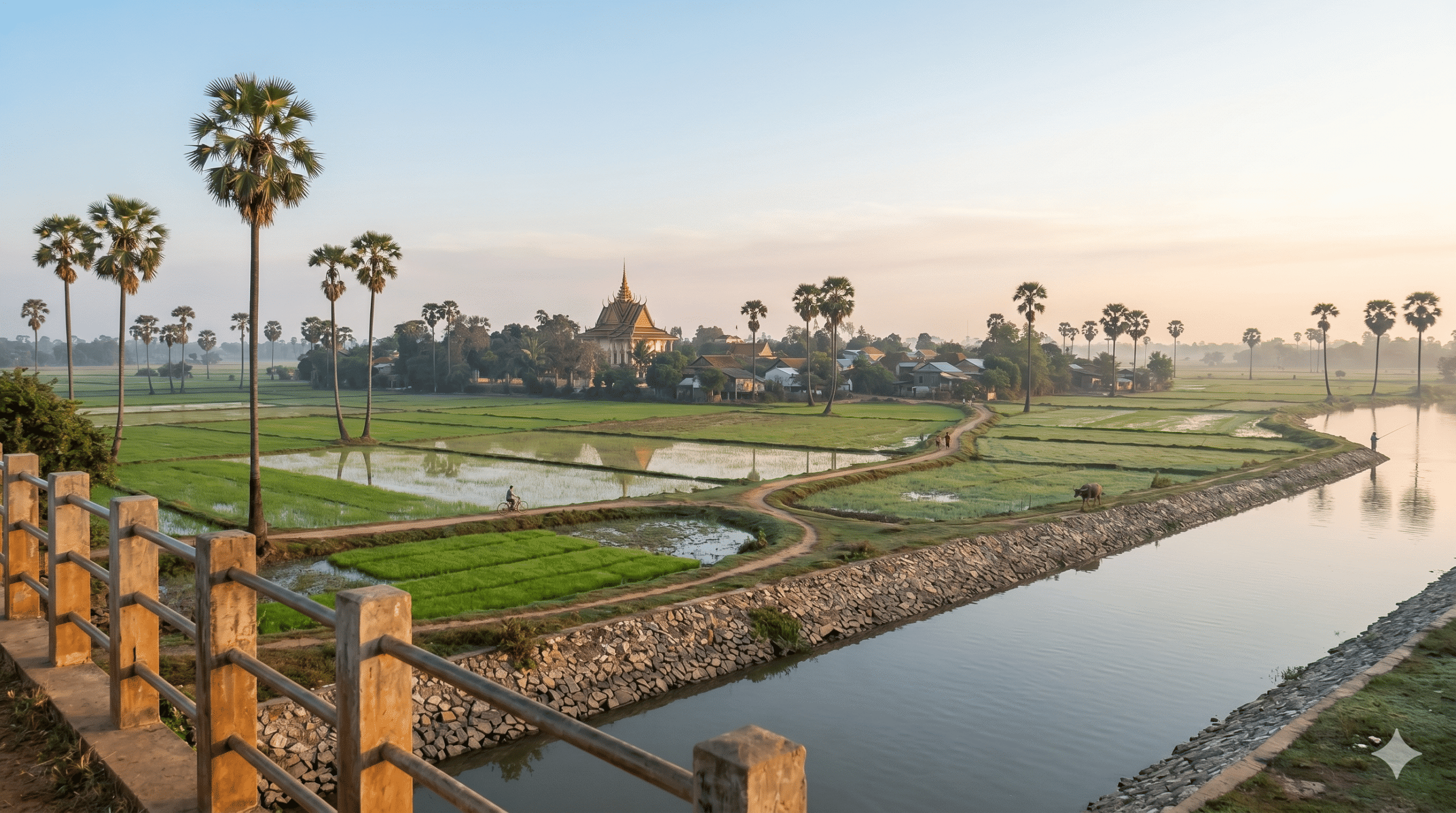
In the soft light of early morning, Krang Leav (ក្រាំងលាវ) rests gently within Kampong Chhnang Province. Rice fields stretch toward the horizon, broken only by sugar palms and narrow dirt paths. The village breathes at its own pace—unhurried, grounded, familiar. Nothing here suggests conflict. And yet, this calm landscape once held a moment when everything changed.
Life Under French Colonial Rule
By the 1920s, Cambodia had been under French control for more than half a century. Since 1863, the Cambodian monarchy had accepted French protection, placing the country within French Indochina, alongside Vietnam and Laos. On paper, Cambodia remained a kingdom. In reality, power was shared—and often dominated—by French authorities. At the top sat the Résident Supérieur, based in Phnom Penh. Beneath him, provincial officials—like Félix Louis Bardez—extended control into the countryside.
Before Midday — A Routine Interrupted
On 18 April 1925, the day began like any other. By late morning, around 11 a.m., two women—Bee (យាយប៊ី) and Ny—walked toward the place where their husbands were being detained. Like many rural wives, they carried food, a simple act of care in a difficult time. But this visit was different.
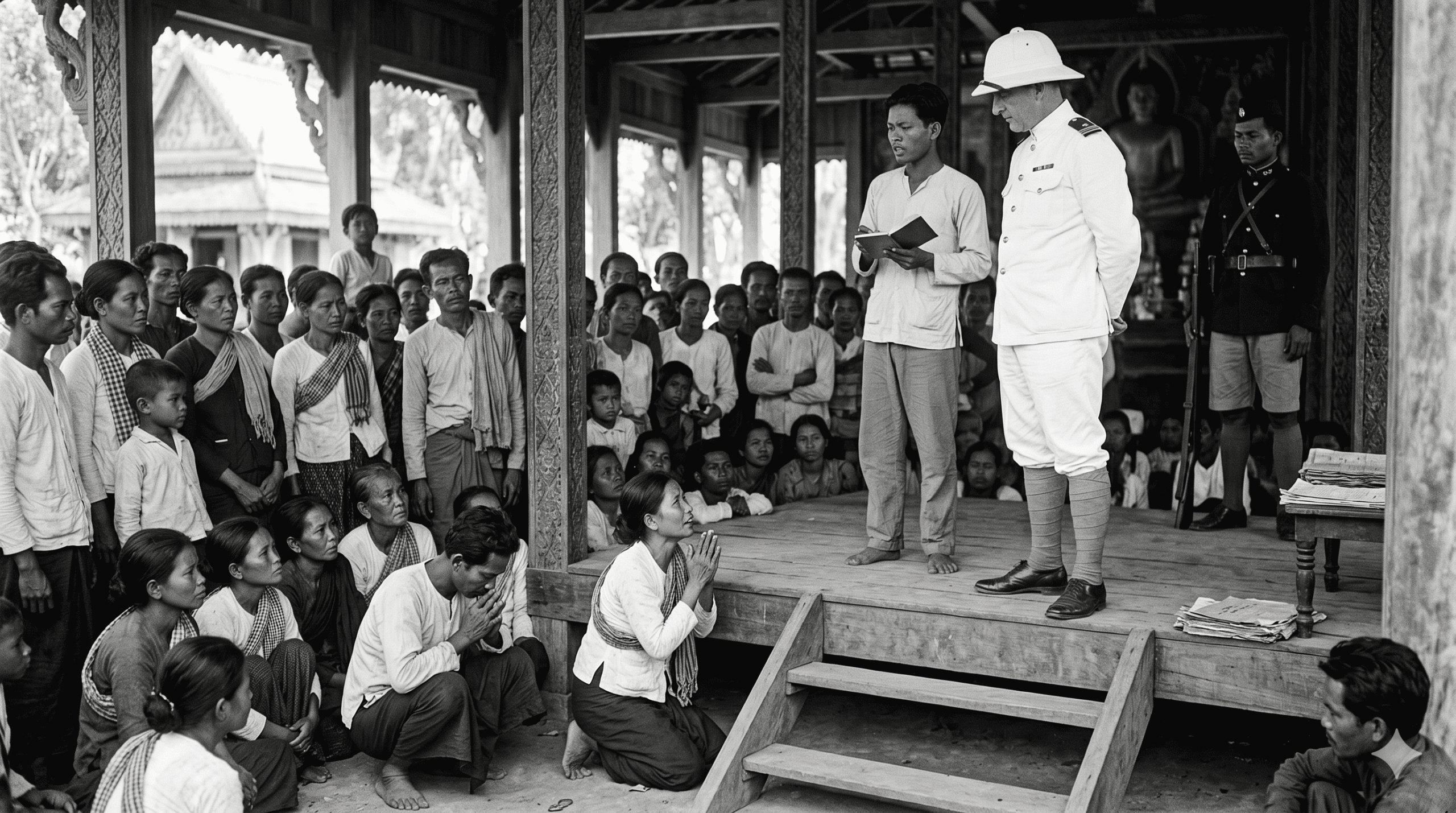
Their husbands had been arrested over unpaid taxes—part of the broader pressure imposed under French Indochina. Detention was not unusual, especially when villagers could not meet financial demands. Among more than ten detainees, only Bee had managed to gather money—enough, she hoped, to secure her husband’s release. She brought it with her. But the offer was refused. Whether due to policy, principle, or power, the French officials did not accept payment—not for one, not in that moment, not under those terms. What might have remained a painful but contained situation began to shift.
Authority on the Ground
Present that day was Félix Louis Bardez, a French résident or province-level official tasked with enforcing colonial administration at the local level. Like others in his position, Bardez represented the authority of a distant system—responsible for taxation, order, and compliance in rural provinces. With him were:
- Suon, a translator—bridging language, but also standing between two worlds
- Lach, a bodyguard—silent, armed, present as a symbol of enforcement
The Confrontation
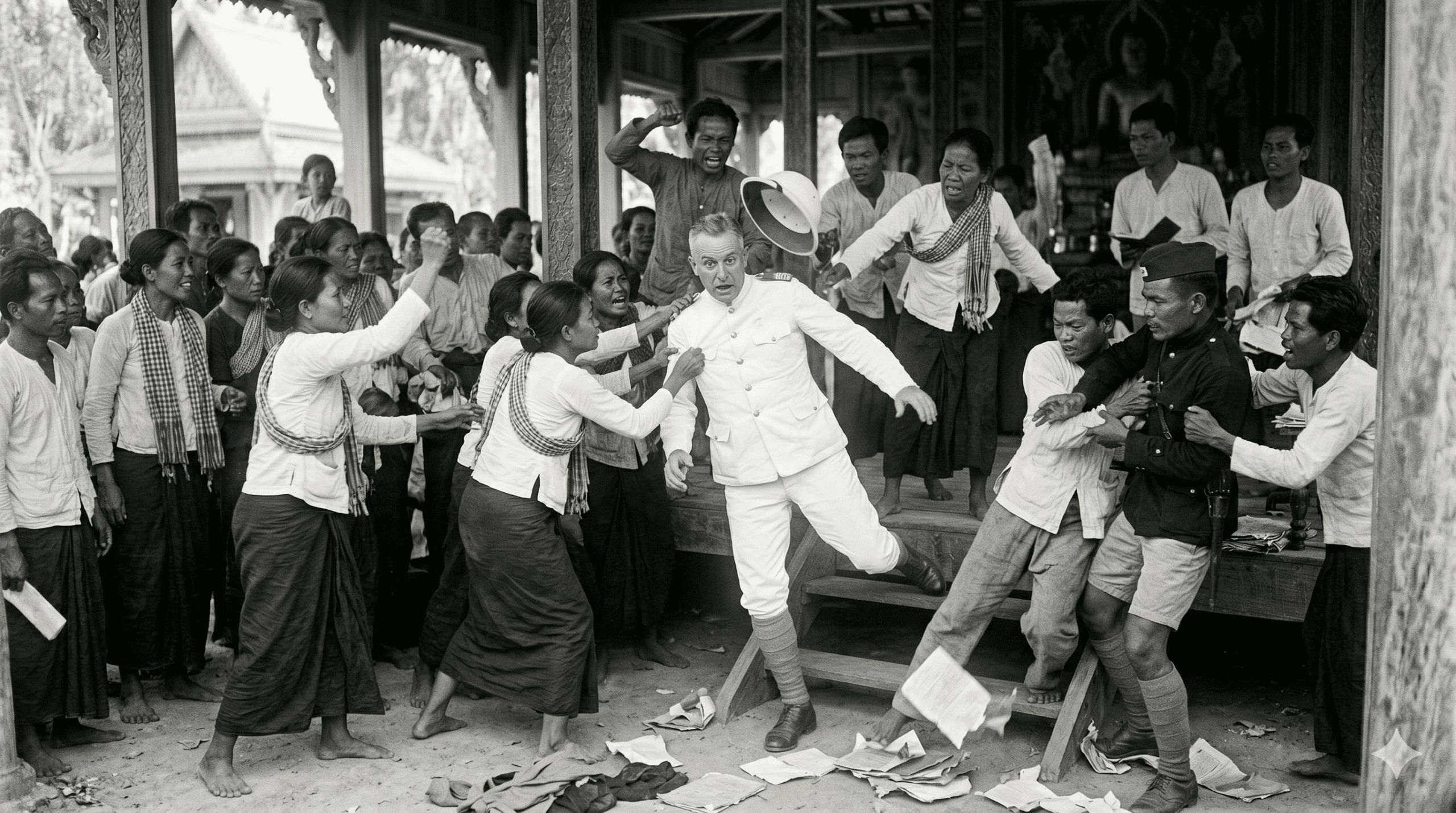
Bee and Ny stepped forward. They were not armed. They were not organized, but they were determined. They pleaded. They protested. Accounts passed down in Cambodia describe a tense exchange. Bardez, through his translator, ordered that the women be threatened—a gun raised toward them as a show of control.
Then— A shot rang out into the sky. It was not meant to kill. But in that instant, something irreversible happened. The sound shattered more than silence—it broke restraint.
The Breaking Point
The sound cut through the air—and through restraint.
Nearby villagers, already burdened by years of hardship, reacted instantly. Among them were Choun and Nov, men from Rolea B’ier district, where frustration had been quietly building. What followed was not a planned uprising. It was a release.
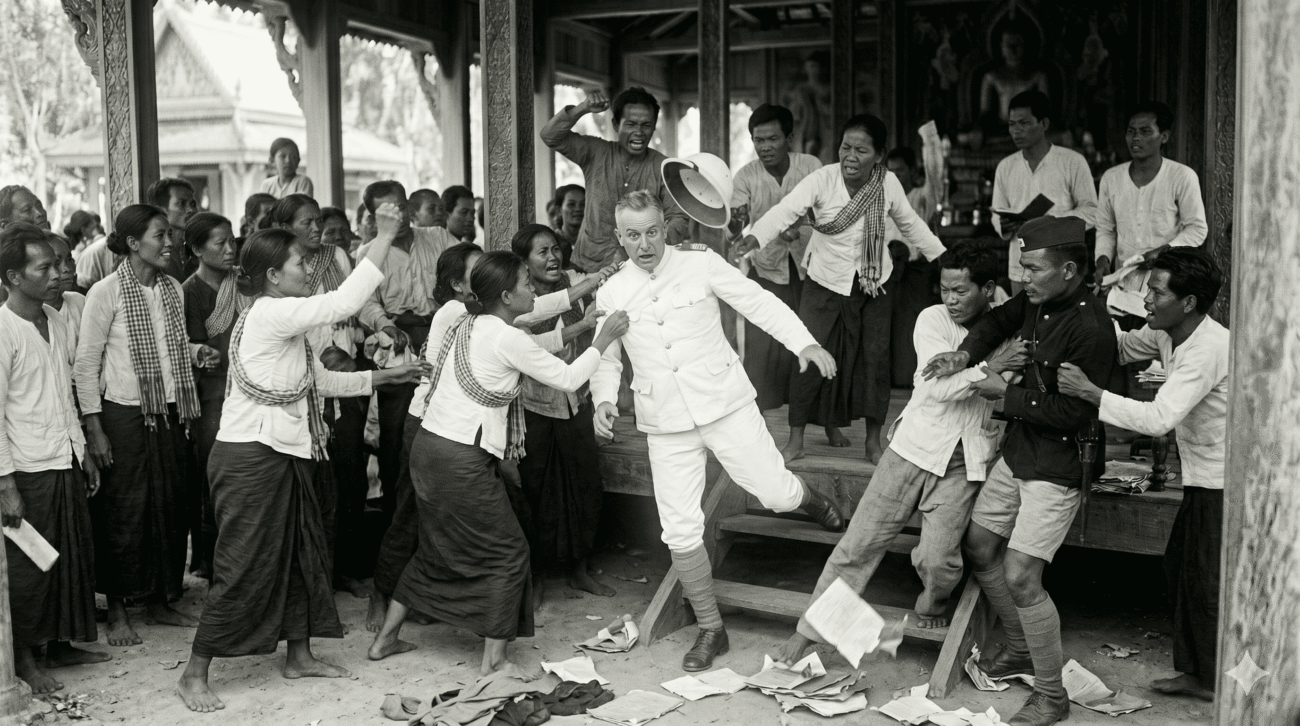
A group of villagers rushed forward. Anger, fear, and long-held resentment collided in a sudden wave of violence: rifle stock used as blunt weapon; stones thrown in chaos; kicks, blows, and shouts filling the space; and axes and knives emerging in the struggle.
Within moments, three men were killed, Bardez, the résident; Suon, the translator; and Lach, the bodyguard.
It was swift, chaotic, and irreversible.
Aftermath — Order Restored, Justice Imposed
The killing sent shockwaves through the colonial administration. The French authorities responded quickly. Orders were issued to identify and arrest those involved in the tragedy, reinforcing control and signaling that such acts would not go unanswered.
At the royal level, King Sisowath took formal action. On 27 April 1925, he decreed that the village be renamed តិរច្ឆាន (Teracchaan) — meaning “beastly” or “barbaric.” In December 1925, eighteen individuals were brought to trial. The court handed down severe punishments, including one death sentence and five sentences of life imprisonment, reflecting the colonial authorities’ determination to reassert control.
Time softened what decree had hardened. A year later, at the request of a royal consort, King Sisowath allowed the village to reclaim its original name— Krang Leav. The label of “barbaric” was removed. But memory stayed.
A Place of Merit and Memory
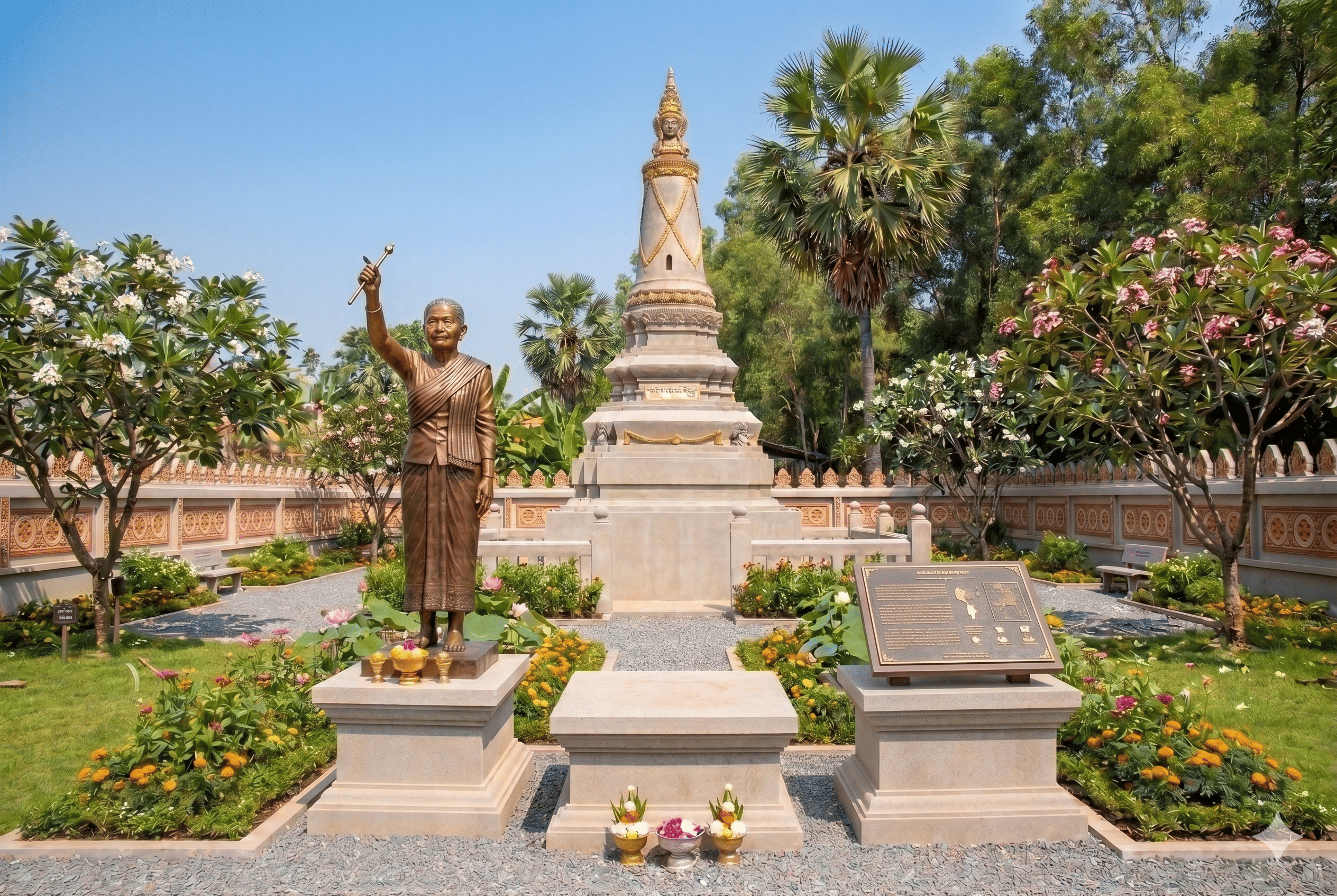
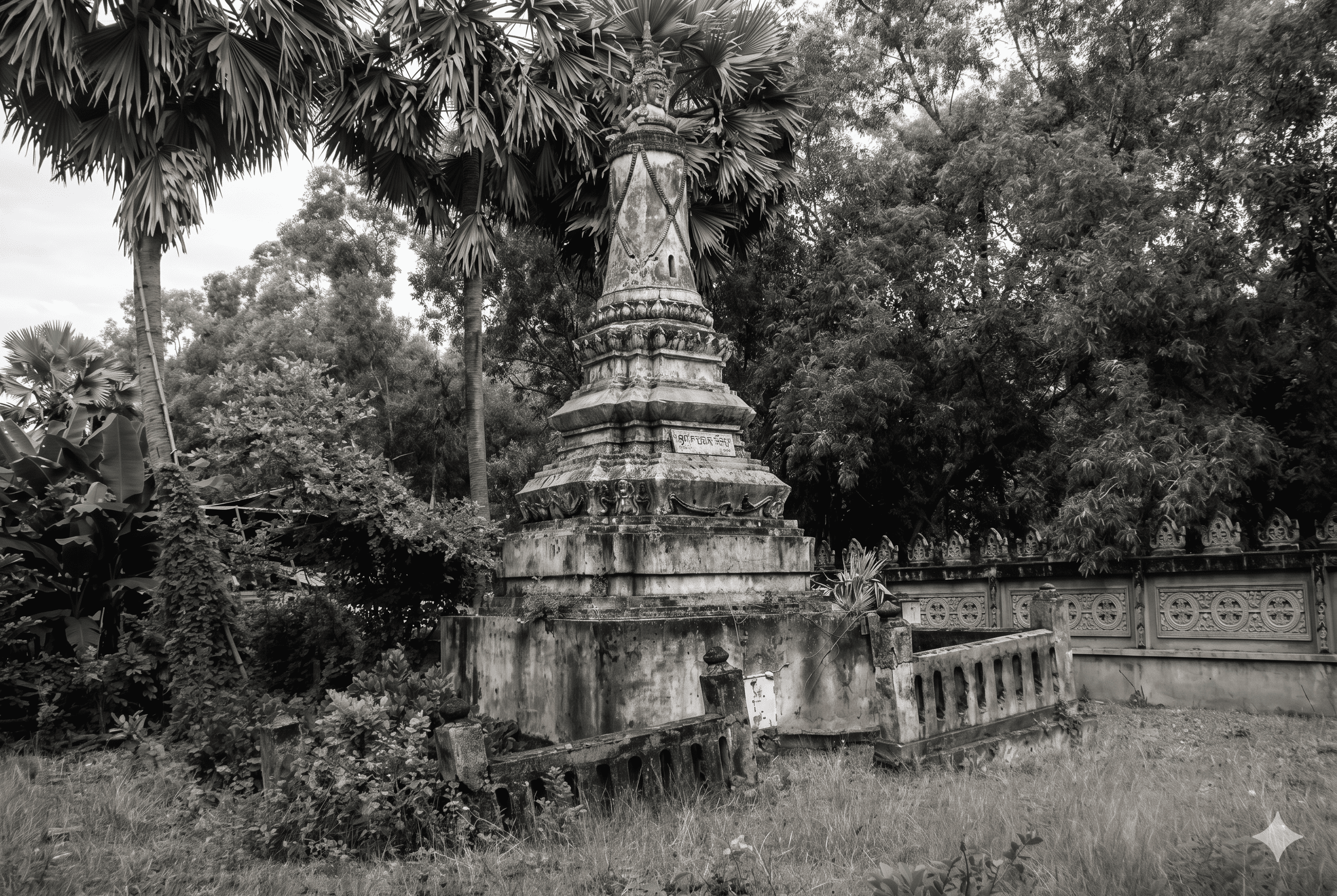
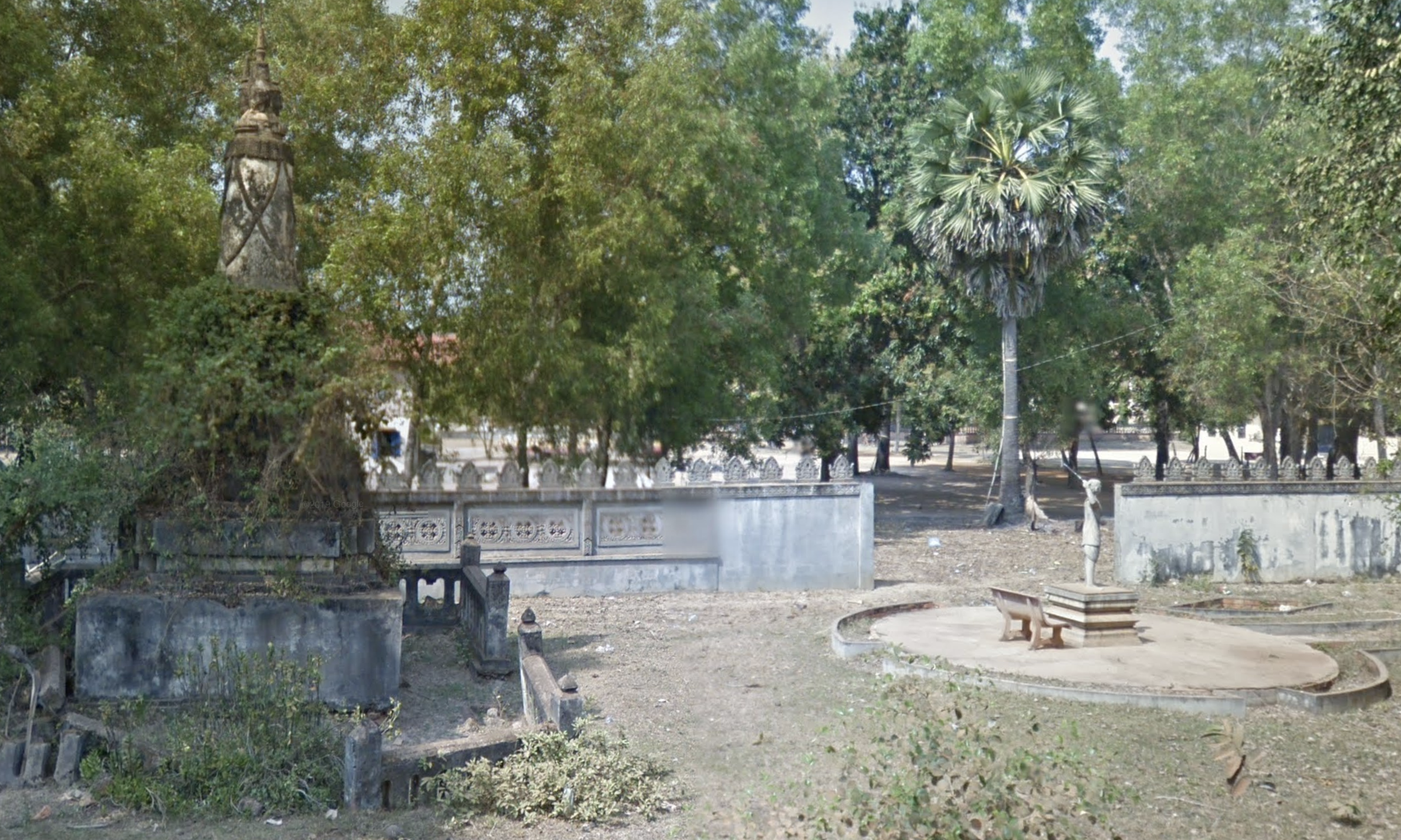
In the wake of the violence, a stupa (chedi) was constructed. It stood not only as a memorial to Bardez, but as a spiritual response—a place where villagers could make merit, seeking to cleanse the weight of what had happened.
The stupa remains today at Wat Ballang Rangsei, in Rolea B’ier district.
Facing the Past — Yeay Bee
In front of the stupa stands a statue of grandma Bee (យាយប៊ី). Not a queen. Not a soldier. A villager, turning her back against the stupa.
One structure remembers a colonial official. The other honors a woman who stood her ground. Together, they form a quiet dialogue—between authority and resistance, between recorded history and lived memory.
Today, life in Krang Liev continues much as it always has. The fields are tended, the seasons pass, and the village remains calm. Yet for those who know the story, the silence carries meaning. The past is not loudly displayed, but it is not gone. It rests quietly in the landscape, waiting to be remembered.
This site, connected to the story of Félix Louis Bardez, deserves careful restoration as a meaningful destination in Kampong Chhnang Province. With thoughtful design and storytelling, it could become a place where visitors reflect on Cambodia’s past—not just as history, but as a human experience shaped by struggle, resilience, and change. More than a landmark, it would serve as a reminder of the importance of humanity, historical awareness, and empathy in understanding both the past and the future.