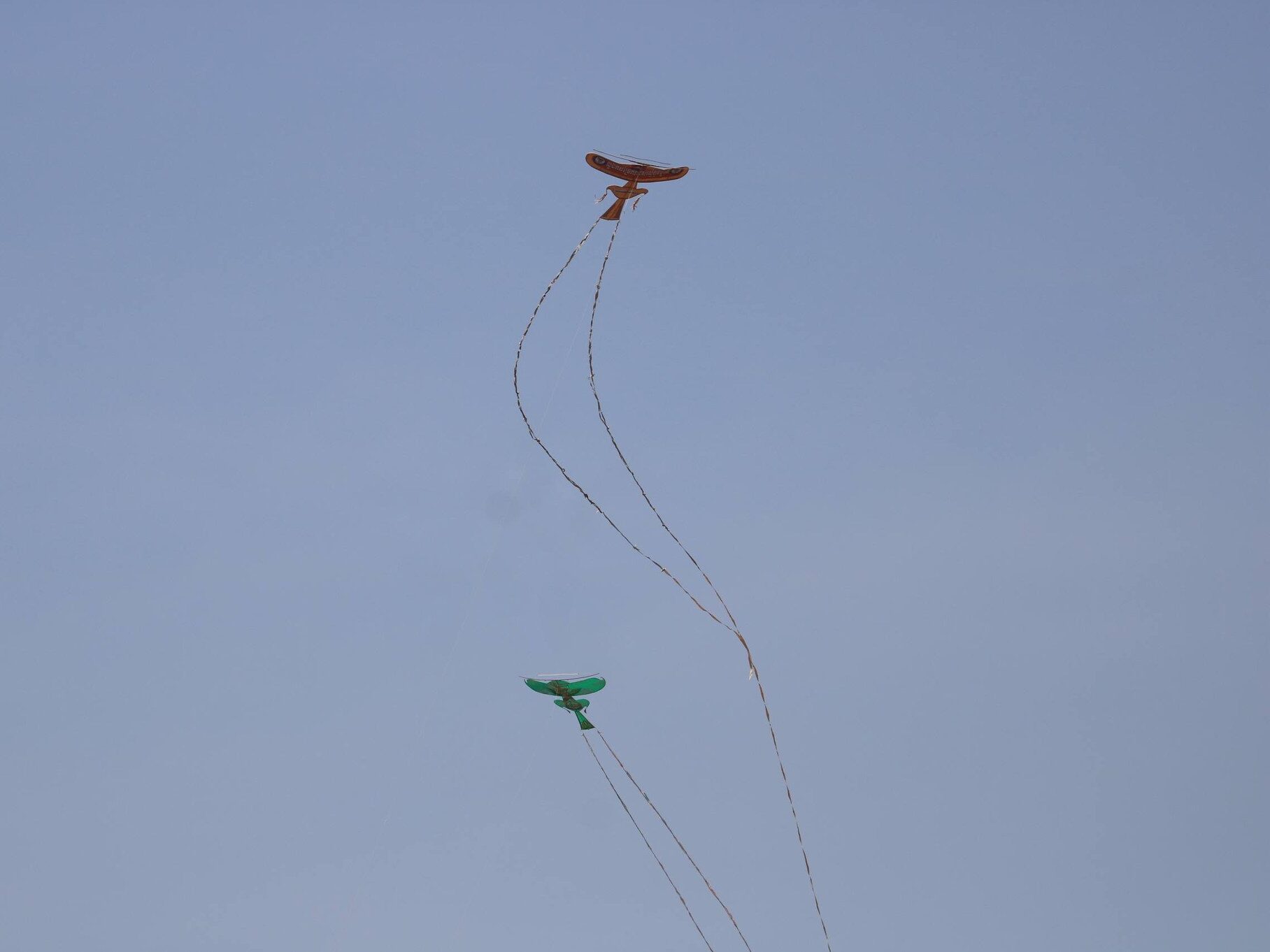
When the monsoon retreats and the northern wind begins to breathe gently across Cambodia’s golden rice fields, the sky awakens with a sound both ancient and enchanting. It is not the cry of a bird, nor the whistle of wind through trees. It is the humming of the Khlaeng Aek (ខ្លែងឯក) — a traditional Khmer kite whose voice carries across villages, sometimes up to half a kilometer away.
More than just a kite, the Khlaeng Aek is a masterpiece of Khmer craftsmanship, storytelling, and spiritual symbolism — a living tradition that still echoes in the skies of Siem Reap during the Cambodia Traditional Khlaeng Aek and Freestyle Kite Festival (ពិធីបុណ្យបង្ហើរខ្លែងឯកខ្មែរ និងខ្លែងសេរី).
A Falcon in the Wind
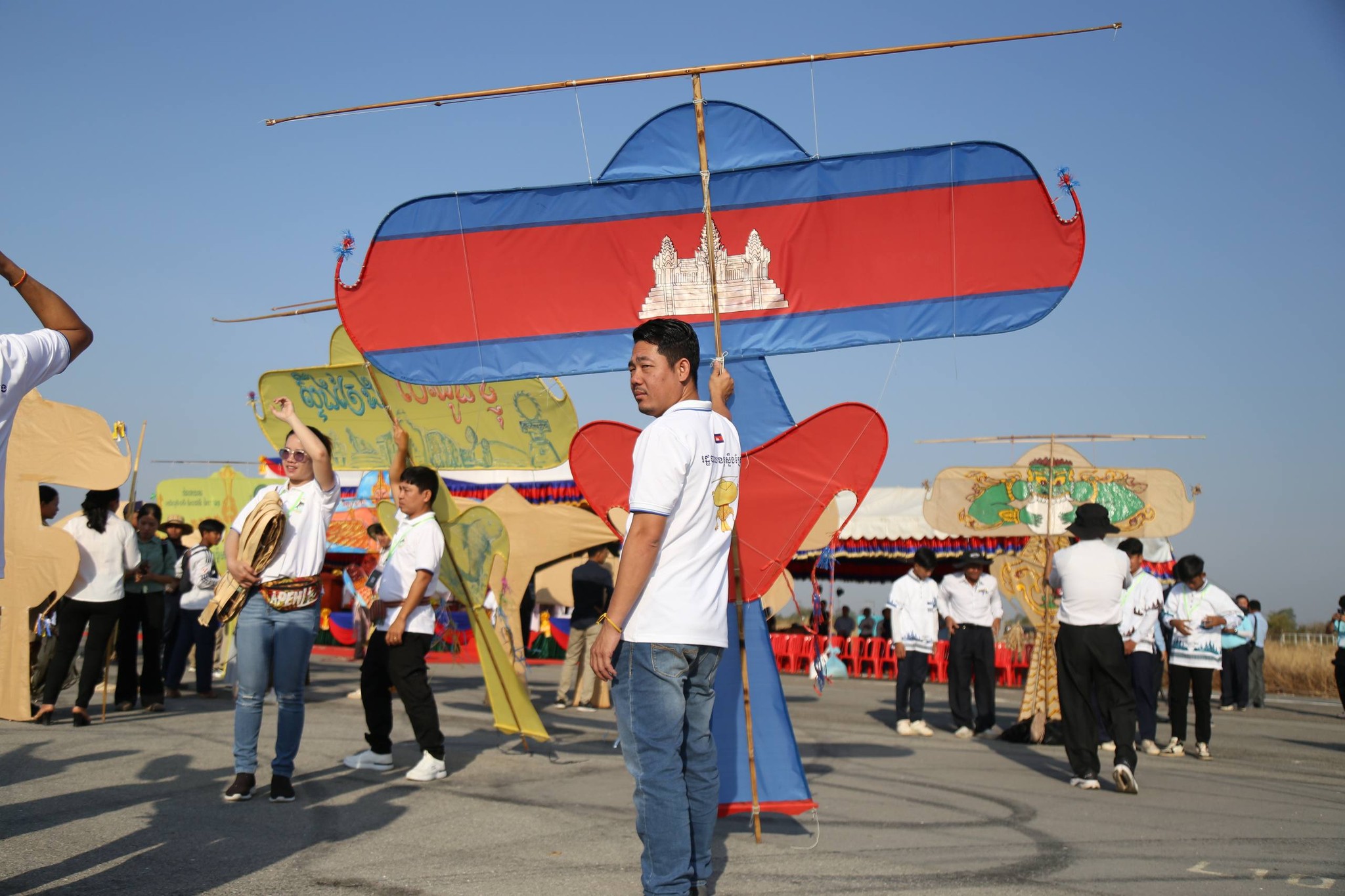
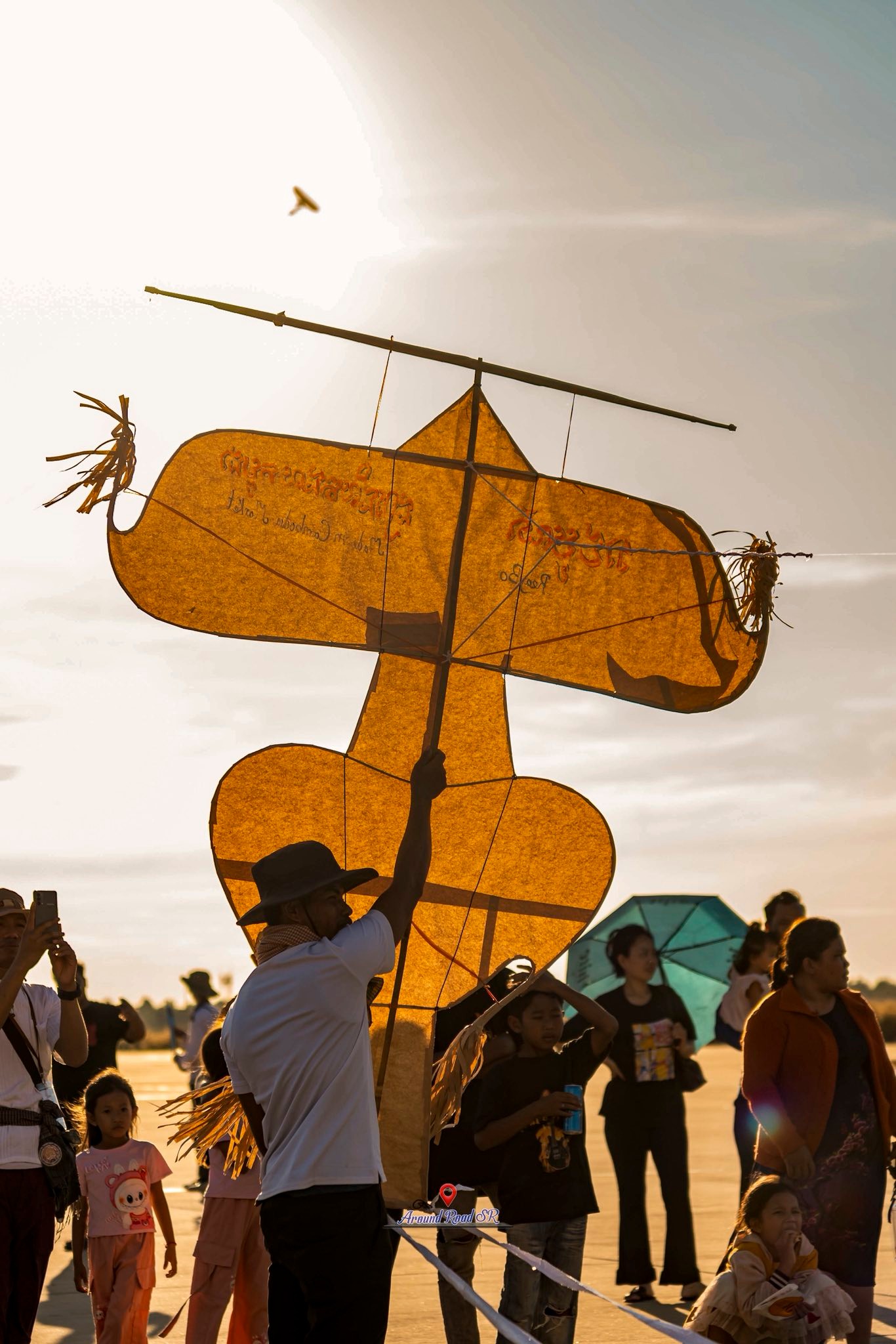
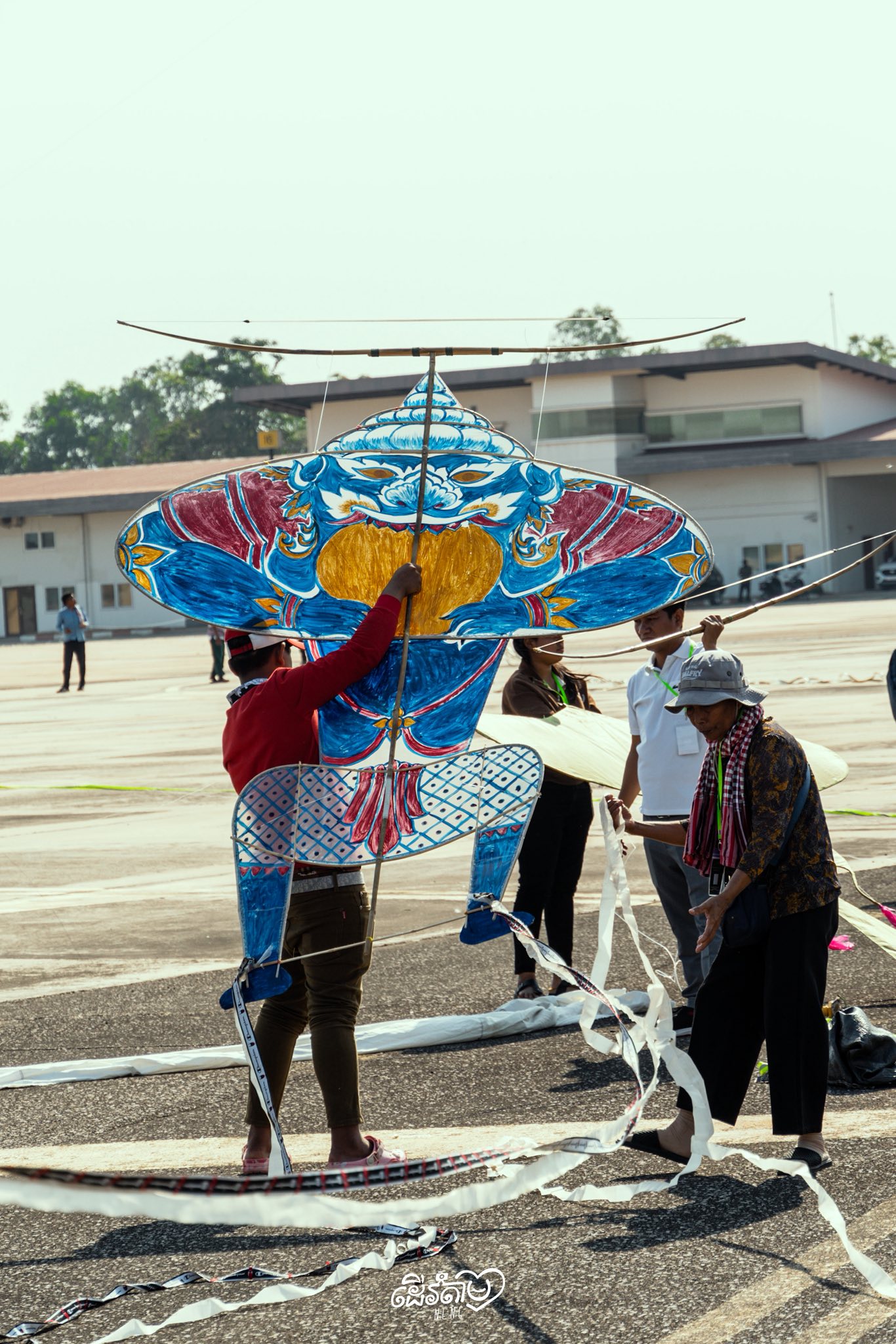
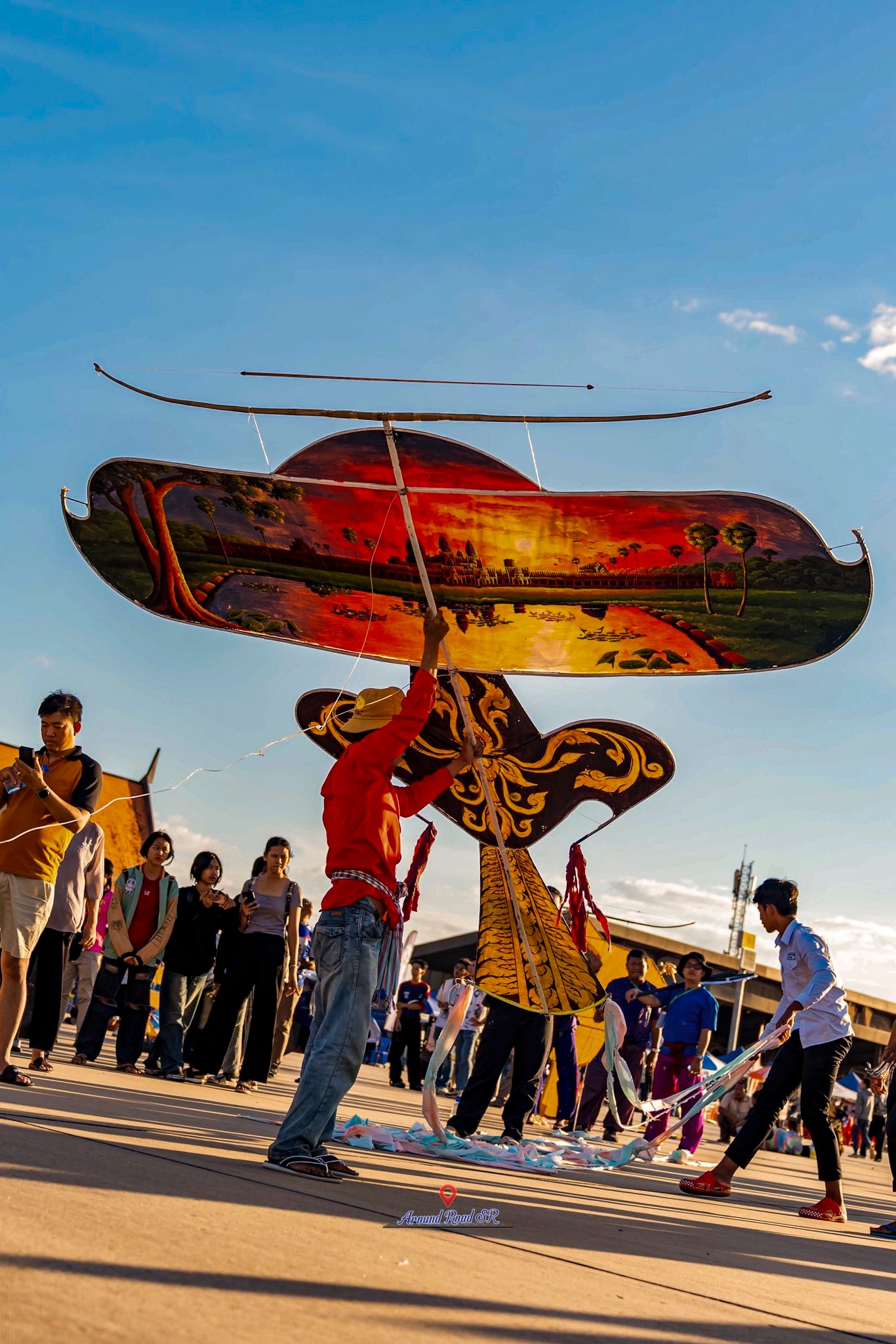
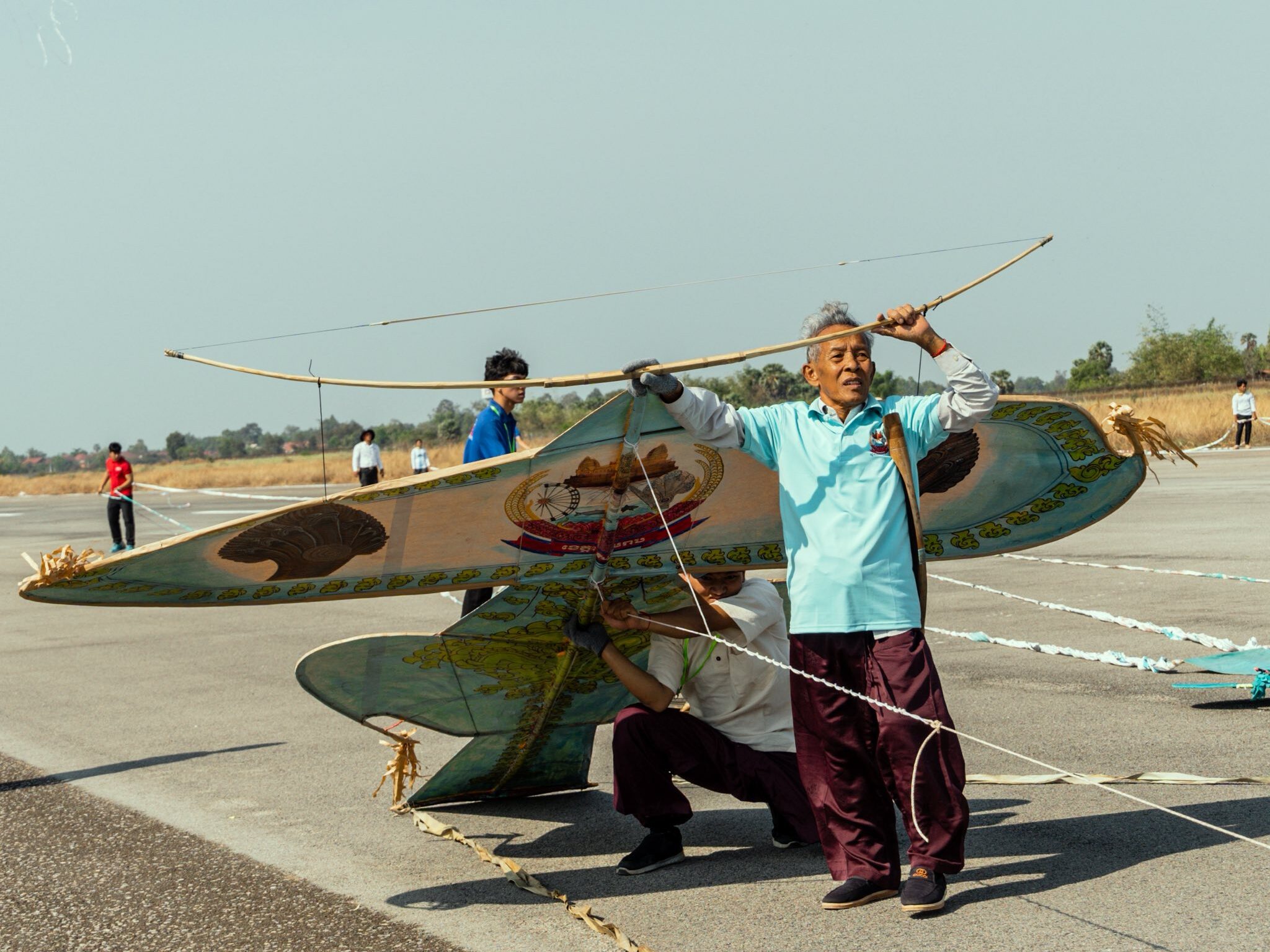
In Khmer, Khlaeng literally means “falcon.” The Khlaeng Aek is an artistic imitation of this powerful bird, shaped with careful balance and intention. Each part of the kite carries a name and purpose, resembling a living creature:
-
- Aek (ឯក) – the long sound-making device
- Beak (ចំពុះ)
- Wings (ស្លាប)
- Fins (ព្រុយ)
- Hip (ចង្កេះ)Leg (កូន)
- Tail (កន្ទុយ)
But what makes the Khlaeng Aek truly unique — and unmistakably Khmer — is the Aek itself.
The Soul of the Kite: The Aek
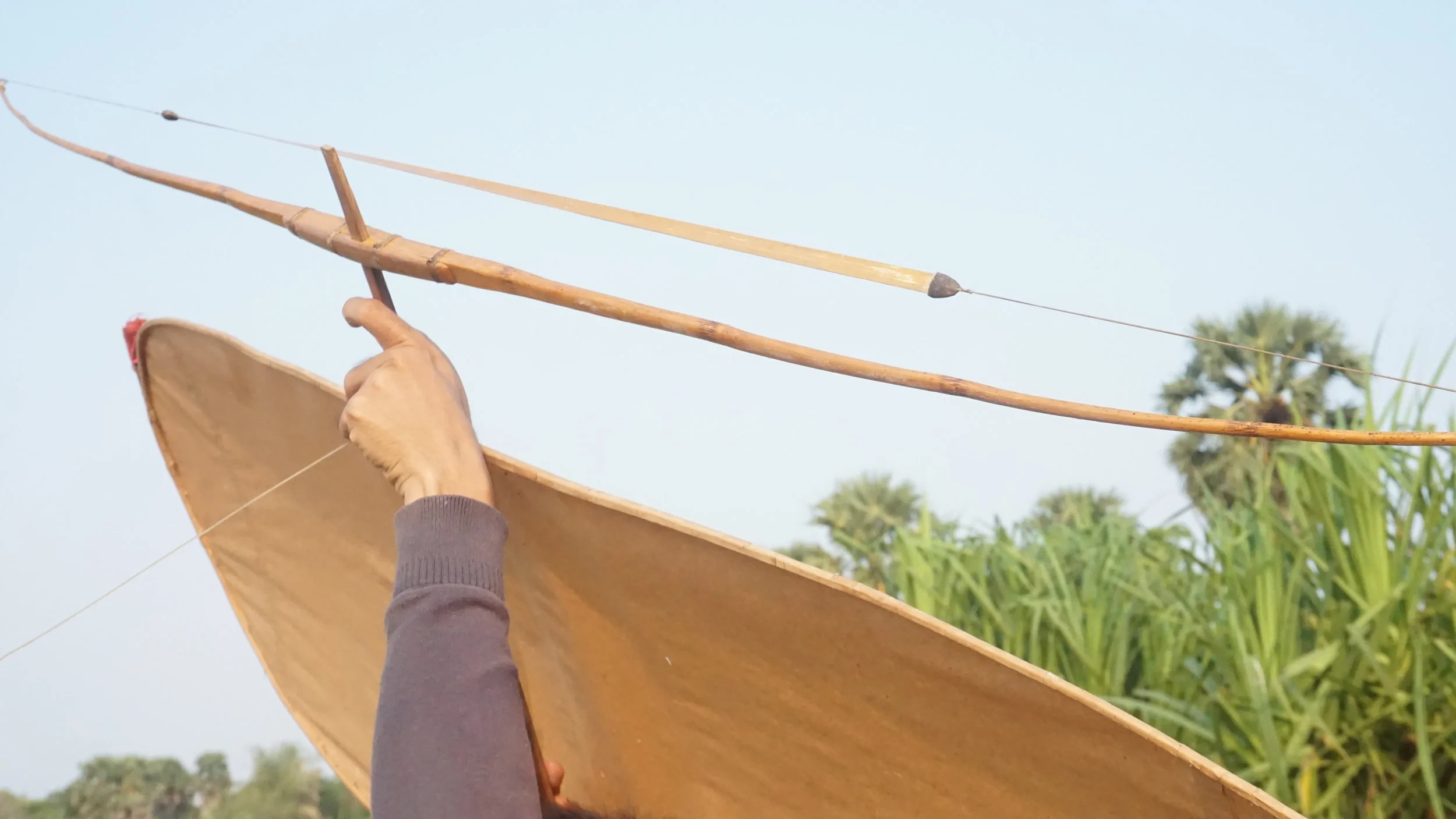
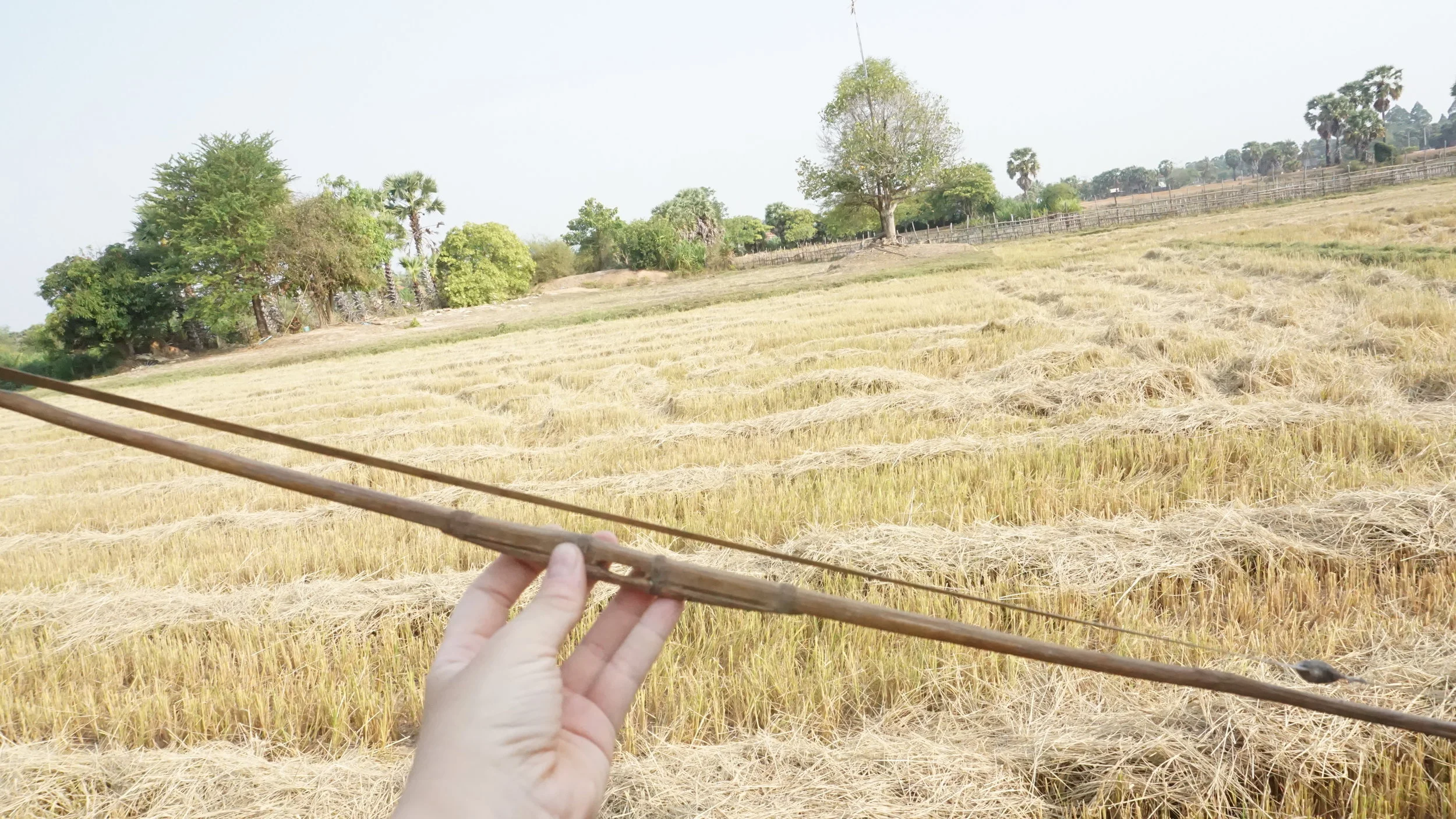
The Aek is a curved, bow-shaped extension attached to the nose of the kite. Strung tightly across it is a durable string — traditionally made from the tendon of a stork or adjutant bird. As the wind passes through, the tension creates a deep, continuous humming sound.
This sound is not accidental. It is intentional, engineered through generations of experimentation and wisdom. The shape of the Khlaeng Aek works in harmony with the Aek, creating resonance that gives the kite its voice. No other kite in the world produces quite the same sustained tone.
In the past, during harvest season when rice fields turned golden and farmers prepared for gathering crops, villagers would fly their Khlaeng Aek at dawn. As they worked in the fields, the humming would drift across the landscape — a shared soundtrack of rural life.
It was not just recreation. It was atmosphere. It was identity.
From Royal Ceremonies to Village Skies
Historically, Cambodian kites were not only village entertainment. They were part of sacred tradition. During the Royal Ceremonies of the Twelve Months, kites could be seen flying as offerings and symbolic gestures — linking earth, wind, and sky in harmony.
The sound of the Khlaeng Aek was believed to carry meaning — some say it called for favorable winds, others that it honored spirits or celebrated seasonal transition. Whether practical or spiritual, its presence reflected deep cultural roots.
A Craft at Risk
Despite its beauty and cultural depth, Khlaeng Aek craftsmanship is now considered endangered.
In the past, kite-making knowledge passed naturally from elders to youth. Today, fewer artisans know how to craft the precise structure, balance the wings, or tension the Aek to produce the perfect hum. Modern entertainment and urban lifestyles have shifted attention away from traditional crafts.
Yet hope remains — and it rises each year in Siem Reap.
Cambodia Traditional Khlaeng Aek & Freestyle Kite Festival
In the cultural heartland of Siem Reap, the sky becomes a canvas during the Cambodia Traditional Khlaeng Aek and Freestyle Kite Festival (ពិធីបុណ្យបង្ហើរខ្លែងឯកខ្មែរ និងខ្លែងសេរី).
The festival has been held twice at the old Siem Reap International Airport:
-
- First Edition: 27–29 December 2024
- Second Edition: 20–22 February 2026
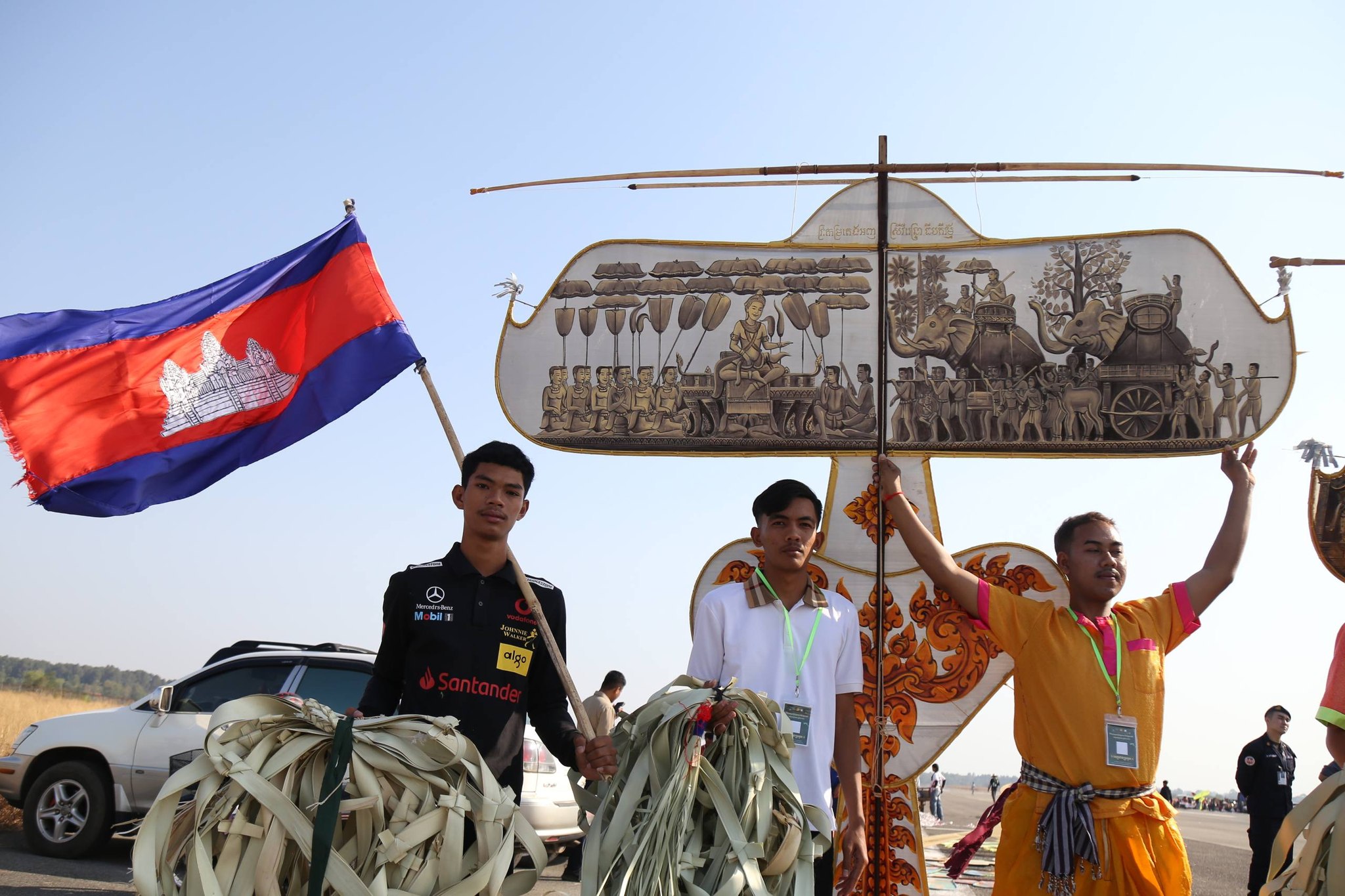
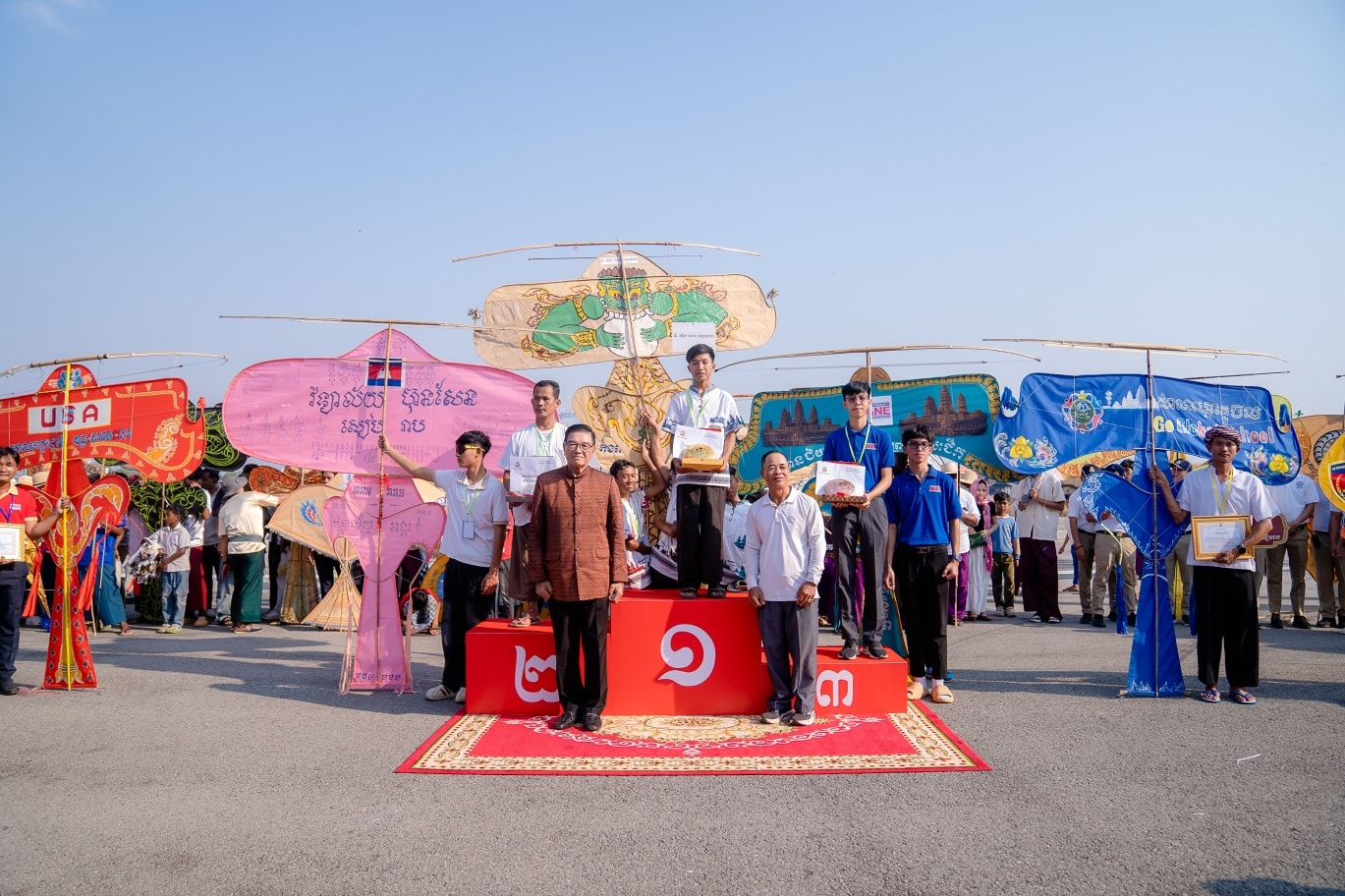
During these vibrant days, more than a hundred of kites soar above open fields — traditional Khlaeng Aek alongside freestyle creations bursting with color and imagination.
Families gather. Children point to the sky. Elders listen carefully for the familiar humming of the Aek. The air becomes alive with sound and movement.
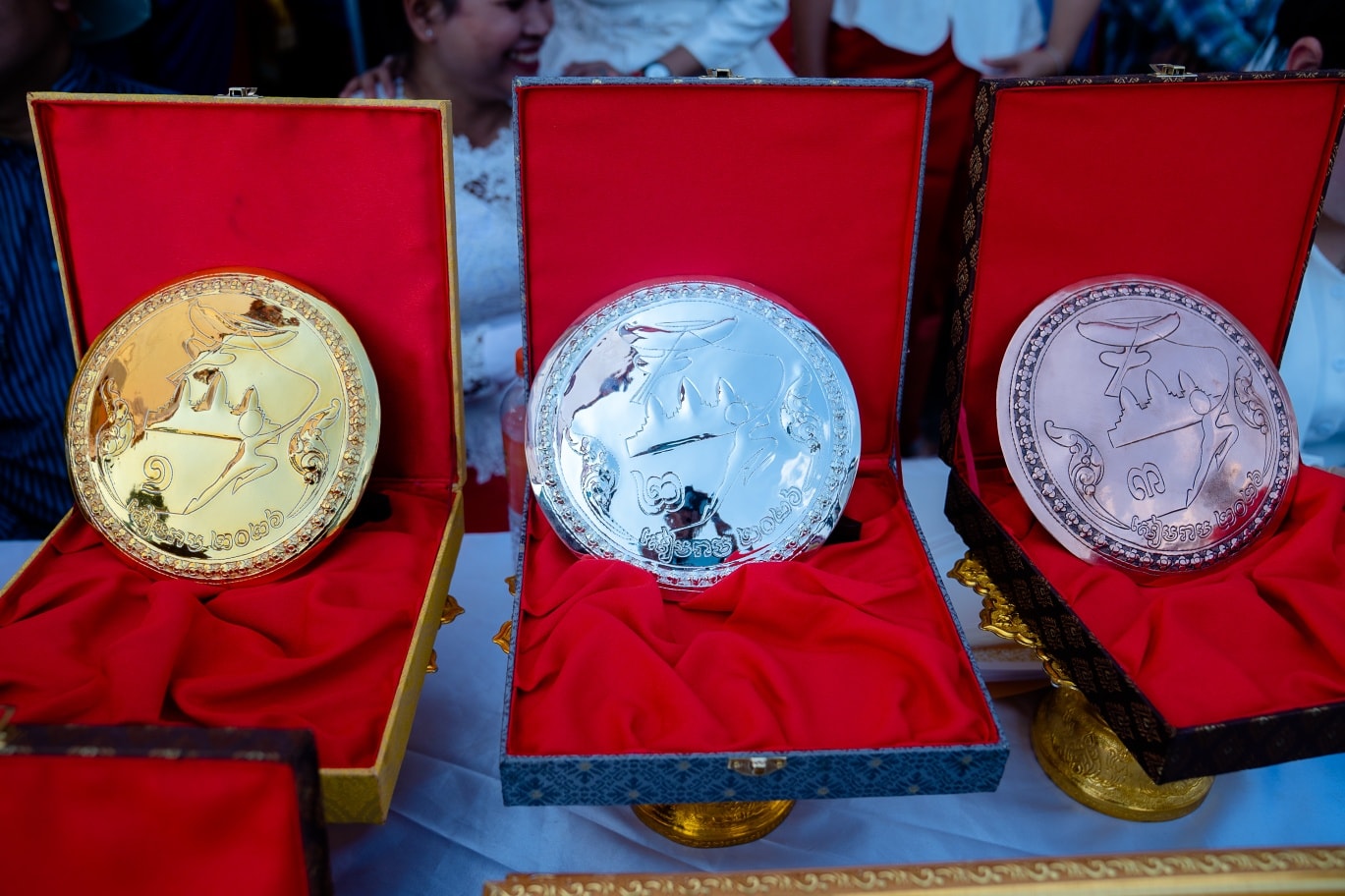
Kite owners compete in various categories, judged on craftsmanship, sound quality, flight stability, and artistic design. Awards are given not only for beauty, but for technical excellence — encouraging artisans to preserve authenticity while inspiring innovation.
More than competition, the festival is a revival. A reminder. A celebration of Khmer identity carried by wind.
Why Khlaeng Aek Matters Today
To watch a Khlaeng Aek rise is to witness a conversation between craftsmanship and nature. It is bamboo shaped by hand, string pulled tight with precision, wind transformed into music.
For visitors to Siem Reap, beyond the ancient temples and bustling streets, this festival offers something deeply intimate — a chance to hear the countryside breathe again.
The humming kite tells a story:
- Of harvest seasons and morning dew
- Of sacred ceremonies and royal traditions
- Of artisans who shape falcons from bamboo
- Of a culture that sings with the wind
As Cambodia continues to modernize, preserving traditions like Khlaeng Aek is not only about nostalgia — it is about safeguarding identity.
And when the northern wind returns, and the sky begins to hum once more, you will understand why this falcon of the wind still matters.
Because in Cambodia, even the sky remembers.